One Health: successful researchers in infectious diseases
 © artjazz - stock.adobe.com
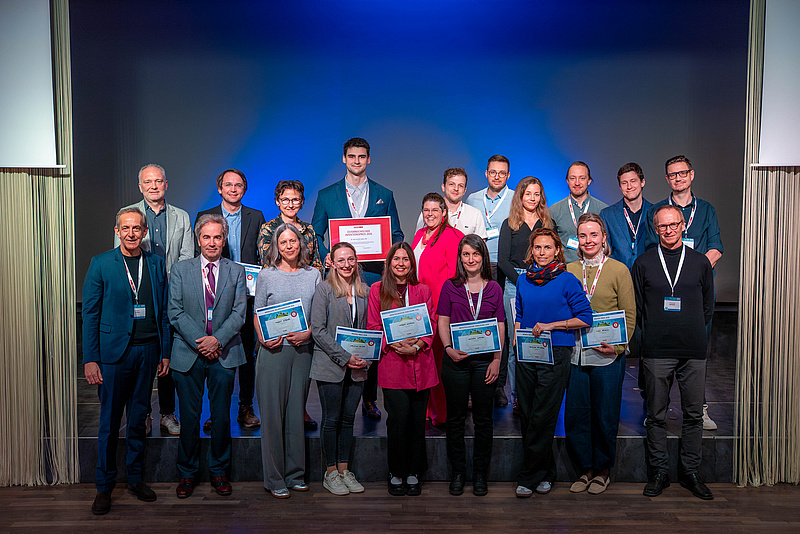
Young researchers from the Division of Infectious Diseases and the University Clinic for Paediatrics and Adolescent Medicine at the Medical University of Graz celebrated great success at the 2026 Austrian Infectious Diseases Congress organised by the Austrian Society for Infectious Diseases and Tropical Medicine. Ines Zollner Schwetz, as Congress President, together with Volker Strenger as Congress Secretary, organised the 18th Infection Congress in Saalfelden, with the main theme “One Health – Infectious Diseases between Humans, Animals and the Environment”. At the congress, Christina Geiger and Lisa Kriegl from the Division of Infectious Diseases won the 1st and 3rd poster prizes for the best scientific papers. Christina Geiger presented the results of her PhD thesis on hantavirus infections (supervisor: Stefan Hatzl, Intensive Care Unit of the University Clinic for Internal Medicine), while Lisa Kriegl presented findings from an antimicrobial stewardship study in primary care (project lead: Ines Zollner Schwetz). Christoph Zurl was awarded second place for the best oral case presentations.
The One Health approach views health as an interplay between humans, animals and the environment. Infectious diseases often arise and spread precisely at these interfaces – for example, in so-called zoonoses, i.e. diseases transmitted between animals and humans. At the same time, global developments such as climate change, environmental degradation and the increasing interconnectedness of our world are significantly altering the dynamics of infections. Rising temperatures, altered habitats and more intensive livestock farming facilitate the emergence and spread of new pathogens and increase the risk of epidemics and pandemics. One Health takes these complex interrelationships into account by bringing together different disciplines and adopting a holistic view of infections – from biological fundamentals and environmental factors to societal influences. The aim is to better understand diseases, detect them at an early stage and develop effective countermeasures. This makes One Health a key approach for sustainably addressing current and future challenges in the field of global health.
Congratulations to the award winners!