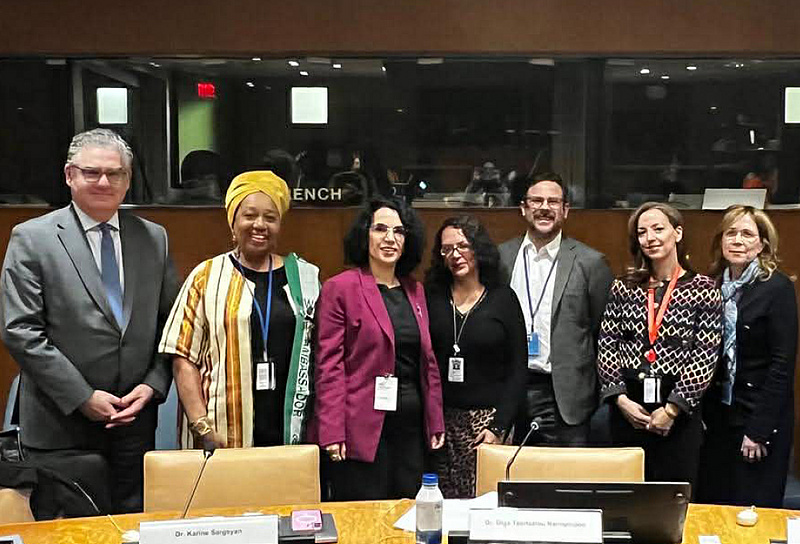
Med Uni Graz represented at an event on women’s health at the UN Headquarters in New York
 ©kasto - stock.adobe.com
A high-level event on digital justice and women’s health was recently held at the UN headquarters in New York. Under the title “Justice in the Digital Age: Advancing Women’s Right to Health in Low-Literacy and Digitally Excluded Contexts”, international experts from the fields of politics, academia and healthcare discussed the challenges and opportunities presented by digital innovations in the global health context.
The Medical University of Graz was represented at this important dialogue by Karine Sargsyan from the Office of the Vice Rector of Research (from November 1, 2025). During the event, she provided key insights into the role of data, artificial intelligence and precision medicine in women’s health.
In her presentation, Karine Sargsyan emphasised that inclusive biobanks and diverse datasets are a fundamental prerequisite for ensuring that AI-supported applications and precision medicine can be used fairly and effectively for women, particularly in oncology. Current data gaps and biases mean that women often do not benefit equally from medical innovations.
Another key focus of her presentation was digital exclusion in low- and middle-income countries. This prevents access to groundbreaking technologies and exacerbates existing health inequalities. The researcher from the Medical University of Graz emphasised that without targeted measures for digital inclusion, the benefits of the digital transformation will remain unevenly distributed.
She also highlighted that gender differences in disease progression have so far been inadequately and inconsistently recorded. Greater consideration of gender-specific differences is essential for developing evidence-based and equitable health solutions.
A central theme of her presentation was the need to bridge the gap between translational research and clinical practice. Only through women-centred data collection and inclusive governance structures can digital health contribute to genuine health equity and an improved quality of life in the long term.
In conclusion, Karine Sargsyan made a clear appeal to the international community: women must be more closely involved in research and development processes to avoid biases in AI systems and to enable sustainable, equitable innovations in the health sector.
The event impressively demonstrated that digital technologies offer enormous potential for improving global women’s health – yet this potential can only be fully realised through targeted measures promoting inclusion, diversity and equality.
Back in February, the renowned scientist took part in the launch of the “Voice of Evidence Network – Top 100 Voices of 2026” as a guest expert on foresight in medicine and digital medicine. This initiative brings together international decision-makers, scientists and innovation leaders who help shape evidence-based policymaking, health innovation and future strategies.
Weitere Informationen
Büro des Vizerektors für Forschung
Medizinische Universität Graz