Cell research: Where aging begins
 © Autism in Focus - stock.adobe.com
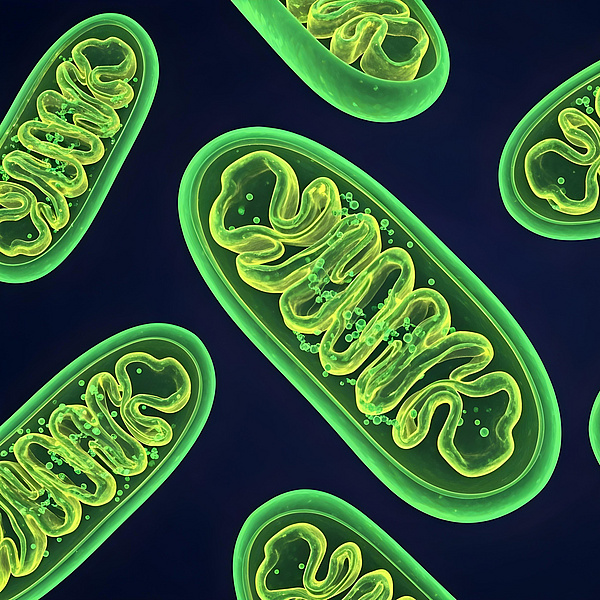
Aging does not begin with grey hair or the first signs of discomfort. It begins in our cells. Over the years, they lose their ability to regenerate, respond more sluggishly to environmental stimuli, and their repair mechanisms slow down. The genetic material becomes more unstable, inflammatory processes increase, and the mitochondria – the powerhouses of the cells – become unbalanced.
“The hallmarks of the ageing cell include genetic instability and inflammation, but also mitochondrial dysfunction,” explains cell biologist Corina Madreiter-Sokolowski from the Division of Molecular Biology and Biochemistry. “Mitochondria produce oxygen radicals, which in low concentrations stimulate longevity signalling pathways but can be harmful to health in high concentrations. That is why these organelles are so crucial to the ageing process and of particular interest to me.”
The human body consists of around 200 different cell types. They do not age at the same rate. Some tissues lose function early on, whilst others remain stable for a long time. “We need to find out when the best time for anti-ageing interventions is,” says the researcher. This is because interventions could be effective to varying degrees depending on the cell type and stage of life.
Aging under the microscope
Anyone entering Corina Madreiter-Sokolowski’s laboratory experiences basic research in real time: cultured human cells at 37 degrees, alongside 1-millimetre-long nematodes at a cool 20 degrees, and high-resolution fluorescence microscopes that make oxygen radicals or calcium ions visible.
“With modern microscopes, we can watch living cells as they generate energy and produce harmful by-products,” she explains. The aim of her work is to identify mechanisms that keep cells healthy for longer and delay age-related diseases. To this end, Corina Madreiter-Sokolowski’s research group is currently running four projects funded by the Austrian Science Fund (FWF). To foster trust in science from an early age, the FWF project “Aging Research Hands-On” was also launched for schoolchildren, introducing pupils from peripheral, rural regions to academic ageing research.
In aging research, however, the focus extends beyond traditional models: exceptionally long-lived species such as the naked mole-rat provide clues to biological protective mechanisms. Findings from such models could, in the long term, inspire new pharmacological approaches; however, their applicability to humans must be carefully assessed.
Lifespan is not the same as healthy lifespan
In theory, humans can live to be 120 years old. What matters, however, is how many of those years we spend in good health. In Austria, people often spend more than 15 years at the end of their lives with significant limitations.
“We are working intensively on new approaches to keep cells healthy for longer,” emphasises Corina Madreiter-Sokolowski. “However, they will only be able to realise their full potential on the basis of a healthy lifestyle.”
In fact, more than 80 per cent of the aging process is influenced by lifestyle and environmental factors. A key term here is ‘inflammaging’ – chronic, low-grade inflammation that contributes to many age-related diseases. “Our daily diet can have either a pro-inflammatory or anti-inflammatory effect,” says the scientist. “Trans fats, refined sugar or an excess of animal fat promote inflammatory reactions. Fibre, omega-3 fatty acids or phytochemicals can reduce them.”
Calorie reduction also plays a role. “A moderate reduction of around 15 per cent of total calorie intake can boost cellular signalling pathways associated with longevity,” explains Corina Madreiter-Sokolowski. “However, this needs to be tailored to the individual. Recent studies show, for example, that women can experience hormonal difficulties with intermittent fasting.”
Rethinking medicine: gender matters
Healthy aging also means taking differences seriously. For decades, clinical trials were predominantly conducted on men. This has consequences: symptoms, drug effects and risks sometimes differ significantly between the sexes.
“Gender-specific differences must be systematically taken into account in research, diagnosis and treatment,” emphasises Corina Madreiter-Sokolowski. Only in this way can safe and effective medical care be guaranteed for everyone and healthy ageing be achieved.
Science meets practice
The book “Der Code zum Jungbleiben” (The Code to Staying Young), co-authored by Corina Madreiter-Sokolowski and general practitioner Kristina Hütter-Klepp, demonstrates how cell biology and everyday life can be combined. At a fully booked reading in the library of the Medical University of Graz, the opportunities and limitations of modern anti-aging strategies were discussed.
“Dietary supplements can help, but they are no substitute for a healthy lifestyle,” says Kristina Hütter-Klepp. “Regular exercise, a balanced diet, sleep, stress management and social interaction remain the cornerstones.”
Or as the experts put it: “Aging is not inevitable. It is a biological process, and we can learn to understand it better and influence it positively.”
Healthy aging tips: What we can do today
- Eat an anti-inflammatory diet:
Fibre, vegetables, fruit, pulses, omega-3 fatty acids and phytochemicals have anti-inflammatory effects. Sugar, trans fats and highly processed foods, on the other hand, promote chronic inflammation. - Consider moderate calorie reduction:
A reduction of around 15 per cent of daily energy requirements can boost cellular signalling pathways associated with longevity in healthy individuals – though this should be tailored to the individual. - Incorporate exercise into daily life:
Just 15 minutes of exercise a day reduces the risk of death by 14 per cent. A brisk ten-minute walk reduces cardiovascular risk by around 20 per cent. - Promote physical activity:
Regular exercise activates muscles, bones and metabolism – and triggers beneficial molecular processes in the cells. - Enjoy coffee in moderation:
Moderate consumption (up to 400 mg of caffeine daily) is considered safe and even beneficial to health. Filter coffee in particular performs well in studies. - Take sleep seriously:
Restful sleep supports repair mechanisms and regulates inflammatory processes. - Take advantage of screening and vaccinations:
Early detection and prevention are crucial building blocks for a longer healthy life span. - Maintain social connections:
Psychosocial factors have been shown to influence biological ageing processes – social connection offers protection.