Study: Exercise as a complement to cancer treatment
 © Vangly – stock.adobe.com – generiert mit KI
It is well known that regular exercise has a positive impact on our health. Endurance training and strength training, carried out several times a week, reduce the risk of all lifestyle-related diseases such as cardiovascular disease, diabetes and certain types of cancer.
A study currently underway at the Medical University of Graz is focusing on the immune-stimulating effects of sport: In the study “Exercise and the Immune Response in Lung Cancer”, Elisabeth Taucher and her team are investigating how exercise on a stationary bike affects lung cancer treatment. Patients interested in taking part can still be included in the study at this stage.
Exercise as a support for treatment
Lung cancer is the most common cause of cancer-related death in men and the second most common in women. In Austria, nearly 4,000 people die each year as a result of the disease. To improve the chances of recovery, intensive research is being carried out into this disease – including at the Medical University of Graz. Elisabeth Taucher from the Clinical Department of Pulmonology at the Medical University of Graz is investigating how the stimulation of the immune system through physical exercise affects the course of the tumour disease.
Current data clearly indicates that the body’s own immune response to the tumour is optimised by appropriately dosed physical exercise. Consequently, exercise therapy has already been established in other countries as a routine adjunct to cancer treatment – in Austria, however, the positive effects of exercise in patients diagnosed with cancer are still little known.
“Tumour cells are fought off by the body’s own immune system. However, tumour cells develop mechanisms to evade this attack by the body’s immune response. Sport and exercise have been shown to have a stimulating effect on the immune system; for example, physical activity leads to measurable increases in cytokine levels in the blood,” explains Elisabeth Taucher, describing the mechanism under investigation in the study. “With this project, we are investigating the effect of a 12-week training programme, supported by medical and sports science expertise, on patients suffering from lung cancer. Data from the literature clearly show that the risk of developing cancer is significantly reduced by regular endurance training. For certain types of cancer, such as breast cancer, there is also already clear evidence that the course of the disease is positively influenced by physical exercise,” the researcher continues.
The aim of the study
The researchers hope to demonstrate through the study that exercise has a positive influence on the course of the cancer. “A few decades ago, it was said that you should no longer exert yourself physically after a heart attack. Today, it is quite normal to take part in sport at a cardiac rehabilitation centre following a heart attack – this actually has a positive effect and is by no means dangerous if done in moderation,” says Elisabeth Taucher. She and her team hope to reach a similar conclusion regarding lung cancer.
Anyone interested can register for the study by calling +43 316 385 12183.
Profile: Elisabeth Taucher
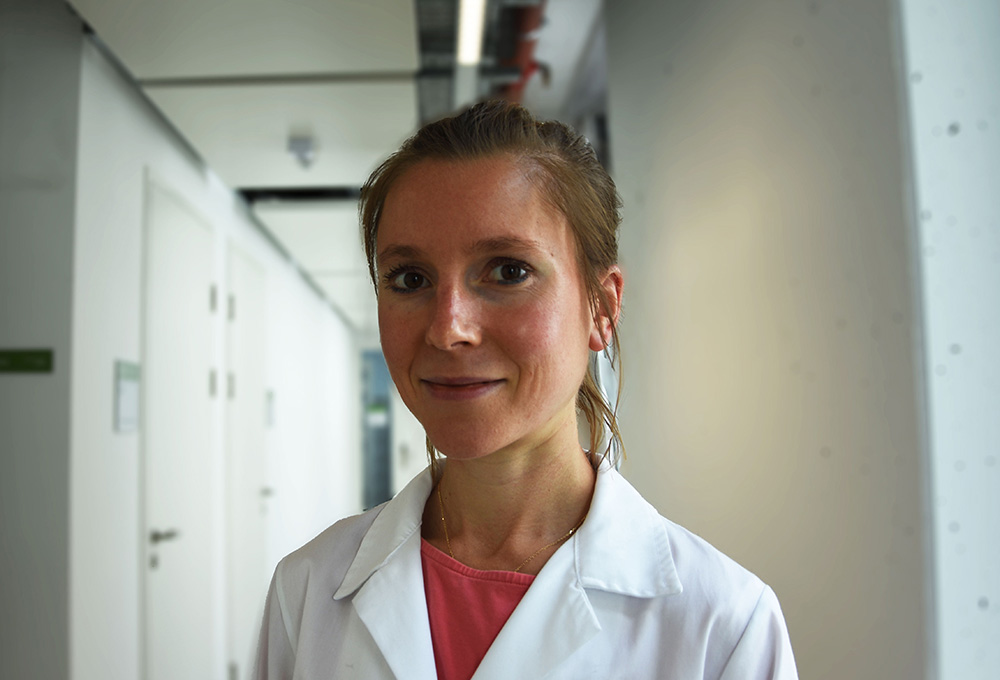
Dr Elisabeth Taucher, MD, PhD, is a specialist in internal medicine and pulmonology and has also completed a diploma in sports medicine. She wrote her thesis on glucose metabolism in non-small cell lung cancer and is particularly interested in new and complementary approaches to cancer therapy. Elisabeth Taucher is herself an enthusiastic amateur sportswoman and tries to instil a love of sport and exercise in her three children as well.
Division of Respiratory Medicine
Medical University of Graz