Harmful protein deposits in the liver
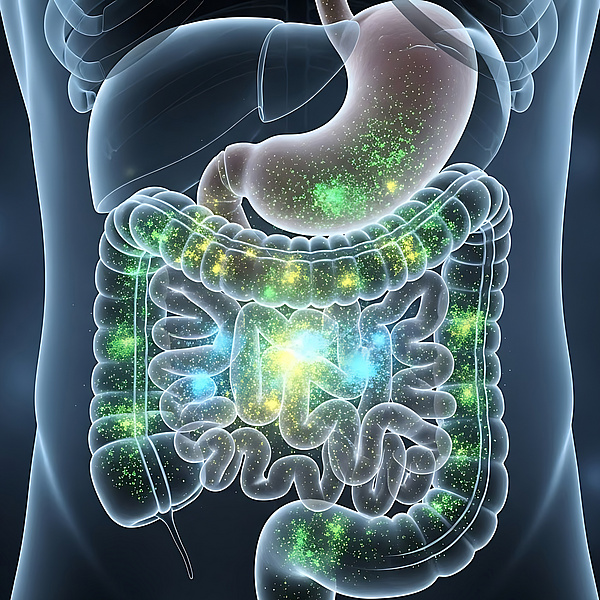 © Homestock Studio – stock.adobe.com – generiert mit KI
Alpha-1 antitrypsin deficiency (AATD) is a rare genetic disorder in which misfolded proteins accumulate in liver cells and can lead to inflammation, fibrosis and severe liver damage. At the same time, the protective protein is absent from the blood, which increases the risk of lung disease. Despite intensive research, there is as yet no treatment that specifically targets the cause of the disease. Three current research projects involving the Medical University of Graz are now pursuing complementary approaches to tackle the condition at its root: from molecular mechanisms and innovative therapeutic platforms to personalised risk assessment.
New therapeutic approach: specifically activating autophagy
A research project at the Division of Gastroenterology and Hepatology at the Medical University of Graz is investigating an innovative therapeutic approach that strengthens the body’s own ‘cleansing system’ for cells – autophagy. The focus is on the Pregnane X Receptor (PXR), which has been identified as a new regulator of this process. By activating PXR – for example, using already authorised active substances such as rifampicin or hyperforin – the breakdown of harmful protein deposits in liver cells can be significantly improved. The aim of the project is to gain a comprehensive understanding of the underlying molecular mechanisms and to assess the therapeutic applicability of this approach.
“We are taking a completely new approach by specifically activating the cellular recycling system. What is particularly exciting is that we can draw on already known active substances,” says project leader Martin Wagner. The grant of 200,000 US dollars from the Alpha-1 Antitrypsin Foundation underlines the potential of this innovative approach.
New therapeutic and delivery strategies
Another project at the Diagnostic and Research Institute of Pathology at the Medical University of Graz is pursuing a complementary approach: rather than suppressing the production of alpha-1 antitrypsin, the aim is to specifically improve the cell’s ‘waste disposal’ system. The focus is on the protein Rubicon, which acts as a natural ‘braking mechanism’ for autophagy. Inhibiting Rubicon is intended to reduce the accumulation of toxic proteins in the liver without compromising the important protective function of alpha-1 antitrypsin in the lungs. In addition, the researchers are developing an innovative platform based on virus-like particles (VLPs), which is designed to deliver therapeutic agents specifically into liver cells.
“Our approach aims to strengthen the cells’ natural cleansing function without disabling important protective mechanisms in the body. Combining this with new transport technologies opens up innovative possibilities,” emphasises project leader Katrin Panzitt. The project is funded by the Alpha-1 Antitrypsin Foundation with US$75,000.
Focus on genetic causes
Through the international multicentre study “A1AT ModGen”, a research consortium led by the Division of General Paediatrics at the Medical University of Graz is investigating why some patients with alpha-1 antitrypsin deficiency develop severe liver disease, whilst others remain symptom-free despite having an identical genetic background. The study is being conducted in collaboration with leading hepatology centres across Europe and involves around 200 participants. Using state-of-the-art whole-exome sequencing, genetic differences between patients with and without liver involvement are being analysed to identify previously unknown factors influencing the course of the disease. The aim is to identify high-risk patients at an early stage and to develop personalised monitoring and treatment approaches.
“We want to understand why the disease takes a severe course in some patients and not in others. This knowledge is crucial so that we can intervene in a more targeted manner in future,” explains Benno Kohlmaier, who is leading the study. The project is funded with 10,000 euros as part of the ÖGKJ and is being carried out in close cooperation between the Department of Paediatrics and Adolescent Medicine and the Division of Gastroenterology and Hepatology.
A shared goal: better prognoses and new treatments
The three projects demonstrate how basic research, clinical research and technological innovation interlink at the Medical University of Graz. Their shared aim is to gain a better understanding of the disease mechanisms underlying alpha-1 antitrypsin deficiency, to establish individual risk profiles and, in the long term, to develop new, less invasive treatment options. The findings could not only improve the treatment of this rare condition, but also open up new avenues for other diseases characterised by harmful protein deposits.
Profile: Katrin Panzitt
After completing her PhD at the Institute of Pathology at the Medical University of Graz, Katrin Panzitt initially worked as a postdoctoral researcher in Graz, then at Baylor College of Medicine in Houston, before returning to Graz in 2013. In 2021, she completed her habilitation and was awarded the venia legendi. Her research focuses on pathophysiology, medical molecular biology and gastroenterology, with a particular emphasis on non-coding RNA, ChIP analyses and, above all, nuclear receptors. She is currently investigating the nuclear receptors FXR for bile acids, PXR for xenobiotics and LRH-1 for specific phospholipids, as well as the role of nuclear receptors in autophagy.
Profile: Martin Wagner
After completing his PhD in human medicine, Martin Wagner undertook both clinical training – progressing from a general internship through to a residency and finally becoming a specialist – and several years of research training in molecular biology at the Medical University of Graz and in the USA. In 2014, he obtained his habilitation in Internal Medicine; in the same year, he became a specialist in Internal Medicine, and he has been an associate professor since 2016. He works as a senior registrar in the Division of Gastroenterology and Hepatology, with a clinical focus on liver diseases. He heads the ‘Translational Nuclear Receptor Research in Liver Metabolism’ research unit at the Division of Gastroenterology and Hepatology. His research focuses on the fields of gastroenterology and hepatology, particularly cholestatic and metabolically-induced fatty liver diseases. His molecular biology research centres on nuclear receptors, autophagy and bile acid metabolism.
Profile: Benno Kohlmaier
After completing his degree in medicine, Benno Kohlmaier trained as a specialist in paediatrics and adolescent medicine. From 2022 to 2025, he specialised in paediatric gastroenterology and hepatology. In 2024, he obtained his habilitation in paediatrics and adolescent medicine. His research focuses on paediatric gastroenterology and hepatology, particularly rare liver diseases, genetic disease mechanisms and the development of personalised diagnostic and therapeutic approaches for children with alpha-1 antitrypsin deficiency.
Kontakt

Klinische Abteilung für Gastroenterologie und Hepatologie
Medizinische Universität Graz

Diagnostik und Forschungsinstitut für Pathologie
Medizinische Universität Graz
Klinische Abteilung für allgemeine Pädiatrie
Medizinische Universität Graz