Molecular diagnostics improve the detection of life-threatening fungal infections
 © peterschreiber.media - stock.adobe.com
Fungi are part of everyday life. Their spores float in the air; they colonise soil, plants and indoor spaces – usually unnoticed, harmless to humans and performing important functions within the ecosystem. However, in modern medicine, another side of these microorganisms is increasingly coming to light: in certain patients, they can lead to serious, and in some cases life-threatening, illnesses.
When fungi become dangerous
The risk of a life-threatening fungal infection is considered particularly significant in people with significantly weakened immune systems, such as those who have undergone organ transplants, those with cancer, those with poorly controlled diabetes, or those in intensive care units. These infections are often severe, spread rapidly throughout the body and are frequently difficult to control with treatment. Particularly feared is so-called mucormycosis – an infection caused by moulds from the Mucorales group. It is regarded as one of the most aggressive forms of fungal infection: under certain conditions, it can destroy tissue, attack blood vessels and trigger life-threatening complications within a short space of time.
Alongside the often complex treatment, the difficulty in diagnosis is one of the major challenges in managing mucormycosis. The symptoms are often non-specific, imaging techniques do not always provide clear evidence, and conventional microbiological detection methods frequently reach their limits. Fungal cultures take time, regularly produce false-negative results, or only yield results once the infection has already spread extensively. In many cases, microscopic examinations are also not sensitive enough.
“Unfortunately, many of these infections are often detected too late or even overlooked,” emphasises Jürgen Prattes, a consultant in internal medicine and infectious diseases at the Medical University of Graz. This can have dramatic consequences, particularly in the case of mucormycosis: “If the diagnosis cannot be made quickly after infection, we lose valuable time and, with it, often the chance of successful treatment. With fungal infections in particular, time means survival.”
At the same time, there is growing evidence that the problem is more widespread than previously thought. Studies are increasingly reporting so-called co-infections: patients affected not by just one, but by several species of fungus at the same time. The combination of Aspergillus and Mucorales occurs particularly frequently – a combination that is especially challenging to treat and often goes unrecognised in everyday clinical practice.
Against this backdrop, attention is increasingly turning to new diagnostic approaches. Molecular methods, in particular PCR diagnostics, make it possible to detect fungal genetic material directly: rapidly, with high specificity and significantly greater sensitivity than conventional methods. Having made its name in viral diagnostics, this technology is now also finding its way into mycology.
This is precisely where the research from Graz comes in. A team led by infectious disease specialists Jürgen Prattes and Martin Hoenigl, together with microbiologist Sarah Sedik, is systematically investigating how these methods can be applied in practice – and whether they can actually help to detect dangerous infections earlier and more reliably.
The results so far point to a fundamental shift in diagnostics. Instead of time-consuming culture methods and tissue examinations, molecular genetic methods could in future enable rapid and direct detection.
This brings a previously underestimated threat more into focus and, at the same time, presents a new opportunity to tackle it more effectively.
Research in Graz brings a breakthrough in fungal diagnostics
At the heart of the current research lies a question of crucial importance for clinical practice: how effectively can mycological PCR diagnostics actually detect those infections that have previously been overlooked?
The Graz research group has provided one of the most robust answers to this question to date. In a large-scale cohort study of bronchoalveolar lavage samples – that is, samples from the lower respiratory tract – the team analysed over 1,400 samples from more than 1,300 patients at risk of invasive fungal infections. The result: in the study, the new PCR test demonstrated a specificity of almost 99 per cent, thereby providing highly reliable positive results for the detection of mucormycosis. At the same time, all clinically confirmed cases were identified in the cohort studied. “These data show very clearly that a negative PCR result is highly likely to rule out a genuine infection,” says Jürgen Prattes. “This is of enormous importance, particularly in a clinical setting where decisions have to be made quickly.”
But the analysis goes further. The data from Graz also show that PCR is positive in a significant proportion of cases where conventional diagnostic methods failed to detect mucormycosis. This is particularly striking in patients who are already suffering from another fungal infection, namely invasive aspergillosis. Here, the team found evidence of additional, previously undetected Mucorales infections. “We see time and again that patients can have not just one, but several fungal infections at the same time, which has direct therapeutic implications,” said Martin Hönigl. “Without PCR, many of these mixed infections would potentially remain undetected.”
This observation is also confirmed by the international multicentre study led by the Graz research group. In this study, samples from several European centres were analysed – with a clear result: PCR achieved a sensitivity of over 94% for the diagnosis of mucormycosis and identified numerous additional cases that had been overlooked in routine diagnostics; both in tissue samples and in bronchoalveolar lavage fluid. The study combines data from several leading European centres and ranks among the largest multicentre analyses in this field.
Of particular relevance here is the high number of so-called co-infections (i.e. simultaneous infection with several different moulds). A significant proportion of patients diagnosed with aspergillosis also tested positive for Mucorales DNA. This is crucial for treatment: not all antifungal drugs are equally effective against both groups of pathogens.
“If we fail to recognise these co-infections, we may end up treating the wrong problem,” says Jürgen Prattes. “This can have a direct impact on the success of treatment.”
Another important component is the analysis of blood samples. Here, too, the potential of PCR is evident: in cases where conventional methods provided no evidence of mucormycosis, Mucorales DNA was detected in the blood – in some instances in patients with severe disease.
“This opens up an additional diagnostic avenue for us,” says Sarah Sedik. “Particularly in critically ill patients, where invasive procedures – such as a lung biopsy – are difficult or cannot be carried out promptly, a blood test can provide crucial clues.”
Overall, the studies paint a consistent picture: PCR diagnostics are not merely a supplementary tool, but have the potential to optimise existing diagnostic practices in the long term. They detect infections earlier and with greater sensitivity than previous diagnostic approaches, whilst also offering a significant time advantage over conventional methods.
For the Graz-based research group, this is the result of years of work – and, at the same time, a clear mandate for the future. “Our aim is to integrate these methods into routine clinical practice,” says Jürgen Prattes. “After all, the ultimate goal is to ensure that patients receive the right treatment more quickly.”
Or, as Martin Hoenigl puts it: “We see this as a real step forward in diagnostics – and an opportunity to improve the prognosis for these serious infections in the long term.”
Profile: Jürgen Prattes
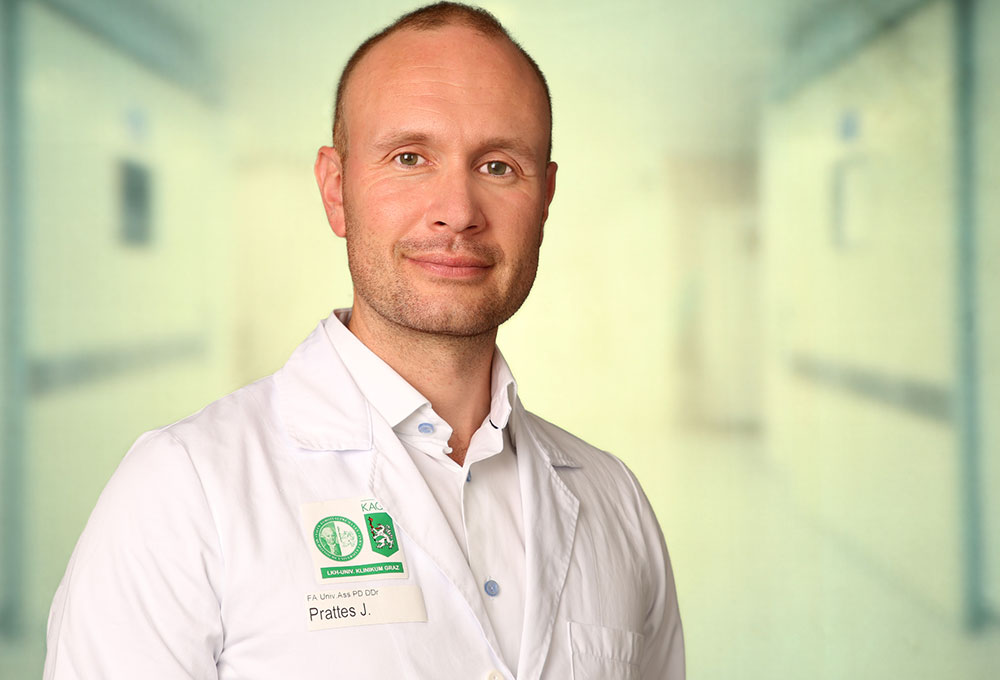
Priv.-Doz. Dr. med. univ. Dr. scient. med. Jürgen Prattes is a specialist in internal medicine and infectious diseases at the Medical University of Graz. At the Division of Infectious Diseases, he conducts research into invasive fungal infections, innovative diagnostic procedures and the optimisation of treatment for patients with severe infectious diseases. The aim of his research is to develop and implement evidence-based diagnostic and therapeutic approaches for the early detection and targeted treatment of invasive fungal infections, with a view to sustainably improving the prognosis and treatment outcomes for affected patients.
Further Information and Contact
Division of Infectious Diseases
Medical University of Graz