Focus on microbes: a research project on hygiene in piglet rearing
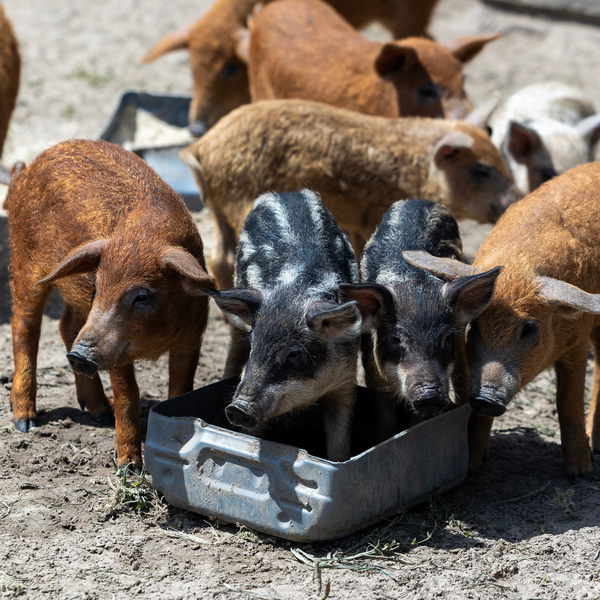 Schweine stehen am Feld in einer Schale.
-
© Sodel Vladyslav - stock.adobe.com
Schweine stehen am Feld in einer Schale.
-
© Sodel Vladyslav - stock.adobe.com
Hygienically sound water is a key component of the healthy development of young piglets. Even with high quality standards in place, questions remain as to the role played by natural microbial diversity in the weaning system. In a highly relevant research project, the Medical University of Graz, the University of Veterinary Medicine, Vienna, and the HBLFA Raumberg-Gumpenstein are jointly investigating how microorganisms develop in water pipes and what significance they might have for animal health. With the help of modern technologies, the aim is to gain new insights for targeted hygiene measures and a sustainable reduction in the use of antibiotics.
Prevention rather than treatment: health during a crucial developmental phase
The first few weeks of life are a crucial phase of development for piglets. The period around weaning from the sow and the transition to solid feed poses a particular challenge for the adaptation of the gastrointestinal system. In addition to feeding tailored to their needs, the quality of the drinking water also plays an important role.
Well-known challenges in piglet rearing include diarrhoeal diseases, which can be caused, amongst other things, by certain strains of the bacterium Escherichia coli as well as by Clostridium perfringens. In practice, antibiotics may also be used for treatment, sometimes via the drinking water. At the same time, every use of antimicrobial agents contributes to the development and spread of resistance. Colistin, which is used in human medicine as a reserve antibiotic, is particularly relevant in this context. Preventive measures that stop diseases at the earliest possible stage are therefore becoming increasingly important.
Understanding the microbiome of water pipes
One area that has received little attention to date is the drinking water system itself. Water in livestock farming must meet high quality standards; however, like many natural habitats, it is not sterile and contains a wide variety of different microorganisms. Under certain conditions, these microorganisms can colonise the surfaces of pipework systems and form stable communities.
‘Biofilms are natural microbial communities that can form on the surfaces of water pipes. Thanks to the protective matrix, the microorganisms within them can be more resistant to external influences. The actual role such biofilms play in agricultural watering systems, and whether they can influence the spread of microorganisms relevant to human health, has not yet been sufficiently investigated. It is precisely this knowledge gap that we aim to close with MikroWaSta,” explains Gernot Zarfel from the Diagnostic and Research Institute of Hygiene, Microbiology and Environmental Medicine at the Medical University of Graz.
“We want to gain a better understanding of the microbial processes taking place in drinking water systems and whether certain structures, such as biofilms, might play a role in the spread of diarrhoea-causing pathogens. Only when we understand these relationships can we develop targeted hygiene measures,” explains Doris Haas from the Diagnostic and Research Institute of Hygiene, Microbiology and Environmental Medicine at the Medical University of Graz. As part of the “MikroWaSta” research project, the team from the Diagnostic and Research Institute of Hygiene, Microbiology and Environmental Medicine at the Medical University of Graz, in collaboration with the HBLFA Raumberg-Gumpenstein and the University of Veterinary Medicine, Vienna, is investigating drinking systems on piglet rearing farms.
In doing so, they are comparing farms with different baseline health situations. The researchers are analysing samples of water, biofilm, faeces and feed. They are using both traditional microbiological methods and modern metagenomic techniques. These make it possible not only to examine individual bacterial species, but also to identify entire microbial communities as well as relevant resistance and virulence genes.
Modern technology reveals microbial interrelationships
Particular focus is placed on determining whether specific bacterial strains are found in different samples. This helps to better understand potential links between water pipes, the animals’ environment and animal health.
The project’s findings aim to demonstrate the significance of biofilms as potential reservoirs for microorganisms in agricultural water systems and how microbial communities change over time. In the long term, this could lead to new, targeted hygiene concepts and management measures.
“Our aim is to contribute to the early prevention of infections and the sustainable reduction in the use of antibiotics through a better understanding of microbial processes in drinking water systems,” says Evelyne Selberherr from the Centre for Food Sciences at Vetmeduni. The study does not call existing hygiene standards into question, but aims to provide additional insights into how animal health and prevention can be further improved in modern livestock systems.
Funded by the Federal Ministry of Agriculture, Forestry, Climate and Environmental Protection, Regions and Water Management (BMLUK), the project thus makes an important contribution to more sustainable animal husbandry and highlights the close link between veterinary research, microbiology and public health.