International collaboration strengthens intracerebral hemorrhage research, education and care
 © Olga Ко – stock.adobe.com – generiert mit KI
Intracerebral hemorrhage (spontaneous brain bleed) is one of the most severe types of stroke. Frequently accompanied by acute neurological symptoms such as weakness on one side of the body, speech disorders or consciousness changes, it is usually a life-threatening illness. To better understand the causes, progression and treatment of this disease, the Medical University of Graz is collaborating on new scientific approaches with international partner institutions in the EU project “CrossReg-4-Health.”
High number of new cases worldwide
About 15 to 25 percent of all strokes are spontaneous brain bleeds. In Austria around 25,000 people suffer a stroke every year. Approximately 4,000 people have a brain bleed. The number of cases around the world is also high; every year around 3.5 million spontaneous brain bleeds occur, and around 70 million healthy life years are lost. The prognosis is often serious, and around half of those affected die within a year of the stroke.
Complex causes require intensive research
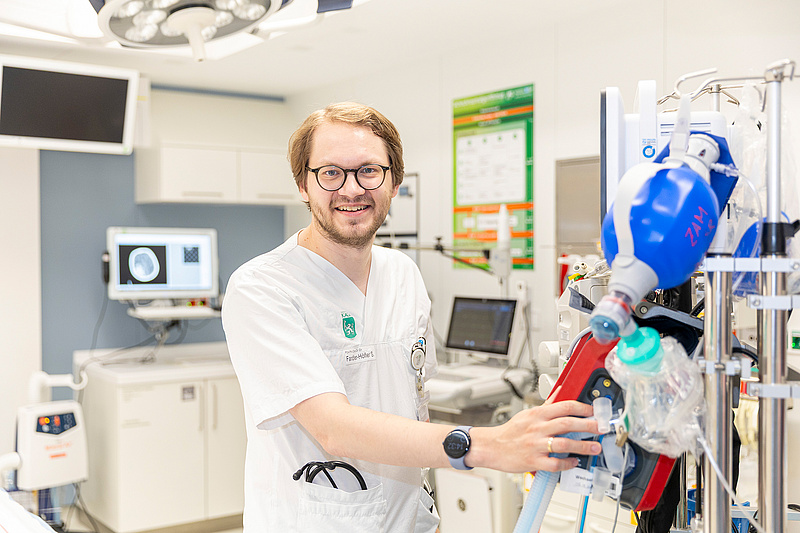
The most common cause of spontaneous intracerebral hemorrhage is cerebral small vessel disease, which is primarily caused by years of hypertension. Cerebral amyloid angiopathy (a disease affecting the blood vessels in the brain), vascular malformations or coagulation disorders can also play an important role. "Despite intensive scientific research, many of the mechanisms that determine the development, progression and prognosis of this disease have not been completely explained," says Simon Fandler-Höfler, a neurologist at Med Uni Graz.
International collaboration for better patient care
This is the point of departure for the "CrossReg-4-Health" project, an international collaboration in which the Medical University of Graz has assumed a key role. The objective of the EU Interreg-funded project is to sustainably improve care for patients with intracerebral hemorrhage in the region along the Austrian-Slovene border and expand cooperation between hospitals, universities and health care professionals.
The total budget of the project is EUR 900,000, EUR 724,000 of which is derived from EU funding. The Med Uni Graz share amounts to EUR 307,000, EUR 246,000 of which is sponsored by the EU. Project partners are University Medical Centre Maribor (lead partner), the Medical University of Graz, Klinikum Klagenfurt and Alma Mater Europaea University in Maribor.
Med Uni Graz investigates biomarkers and prognosis
Within the project, Med Uni Graz is taking over the management of a pilot project investigating biomarkers and modern imaging techniques. Under the direction of Simon Fandler-Höfler from the Department of Neurology, blood biomarkers are combined with high-resolution magnetic resonance imaging. The aim is to better understand the underlying causes of intracerebral hemorrhage and to predict disease progression more precisely in the future.
The research builds on existing studies at Med Uni Graz and should provide new insights that facilitate more individualized therapy planning and improved prognostic assessment.
Joint education and research for better patient care
One main emphasis of the project is the establishment of a digital educational platform for health care professionals. It should give doctors, caregivers and therapists from fields such as physical therapy or speech therapy access to the latest scientific findings and tailored treatment plans. The project also includes other pilot projects on rehabilitation and pain management.
In the long term, the project findings should not only provide new insights into the development and prognosis of brain bleeds but also strengthen the collaboration between medical institutions in the region. "The jointly developed clinical guidelines should contribute to a sustainable improvement in treatment and care for people who have had a brain bleed," says Fandler-Höfler.
Further information
Department of Neurology
Medical University of Graz