Forever young? New drug strategies target cellular ageing
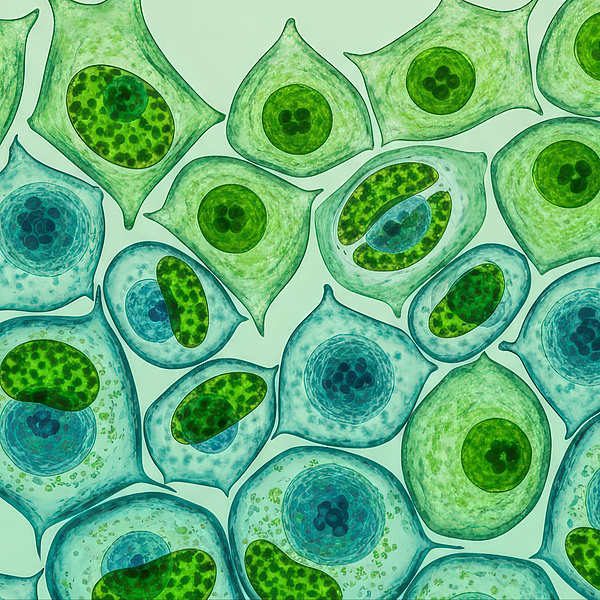 © Digital - stock.adobe.com - generiert mit KI
How do age-related diseases develop, and can their biological causes be influenced? Whilst initiatives such as MetAGE investigate metabolism as a key driver of healthy aging, Tobias Madl and his research team at the Medical University of Graz are looking beyond this to the molecular processes within cells that regulate signal transduction. The aim is to understand how ageing occurs at the most fundamental level and what approaches this might yield for new therapies.
Aging as a biological process
Aging begins long before we are consciously aware of it. In every cell, complex networks ensure that damage is repaired, proteins are folded correctly and energy is supplied. With increasing age, however, this balance gradually begins to falter. Repair mechanisms become less efficient, metabolic processes change, and communication between cells becomes more prone to disruption. These changes contribute to an increased risk of chronic diseases.
Modern research therefore does not view Aging as a single mechanism, but as the interplay of many biological processes that influence one another.
Senescent cells: a curse or a blessing?
Particular attention is being paid to so-called senescent cells. They cease to divide, for example as a safeguard against uncontrolled growth or as part of healing processes. In the short term, this fulfils important functions. Over time, however, such cells can accumulate and send out inflammatory signals that place a strain on the surrounding tissue.
This dual role makes senescent cells an exciting field of research. They exemplify how the body’s protective mechanisms can become risk factors in aging.
Understanding molecular targets
To develop new therapies, researchers are analysing the signalling pathways that determine survival or programmed cell death. The focus is particularly on proteins that act as central control points and coordinate complex stress responses.
A better understanding of these molecular interactions offers the possibility of specifically intervening in processes that contribute to the development of age-related diseases.
Senolysis: a new therapeutic approach
One promising approach is so-called senolysis, i.e. the targeted removal of senescent cells. The idea is to disrupt their specific survival mechanisms and thus reduce their numbers in the tissue. Experimental studies show that this can attenuate inflammatory processes and improve organ function.
At the same time, intensive work is underway to develop suitable biomarkers to better assess the biological state of tissues and reliably measure therapeutic effects, which is a prerequisite for the path to clinical application.
Translation as a challenge
The path from fundamental discoveries to new treatments is demanding. In addition to effective substances, a precise understanding of biological relationships and carefully planned studies are required to demonstrate safety and efficacy. Furthermore, it is becoming increasingly clear that ageing processes are individual and influenced by genetic and environmental factors.
Outlook: Healthy aging
Research does not pursue the vision of halting Aging. Rather, the aim is to influence biological processes in such a way that diseases occur later or progress more slowly. Advances in molecular biology and interdisciplinary collaboration are opening up new possibilities for achieving this goal.
Scientific work at the Medical University of Graz is helping to improve our understanding of the complex mechanisms of cellular ageing and, in the long term, to find ways of translating scientific findings into concrete therapeutic strategies. This brings us closer to a future in which not only life expectancy increases, but above all the number of years spent in good health.