The unhealthy gut microbiome: strong networks of archaea and bacteria
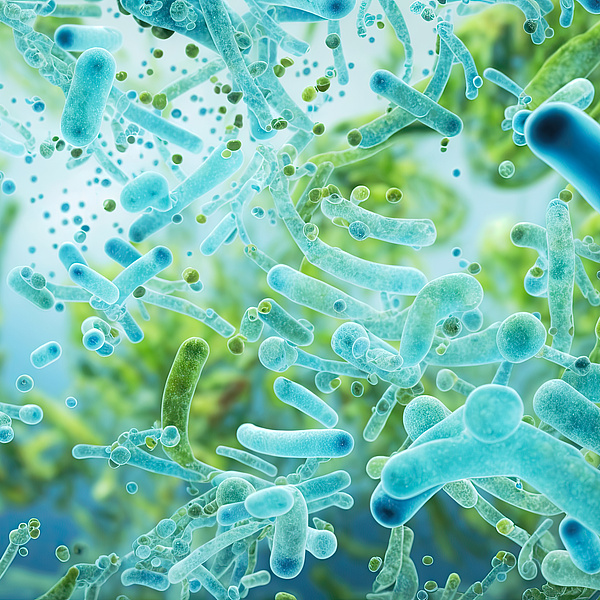 © Hoody Baba - stock.adobe.com - generiert mit KI
The human gut is a habitat for a highly complex microbial ecosystem that significantly contributes to health. While microbiome research has focused on bacteria for many years, archaea—an evolutionarily independent group of microorganisms—have hardly been investigated. A new international study led by the Medical University of Graz and published in Nature Communications has now shown that gut archaea are important partners within microbial networks, opening up new perspectives on how to understand colorectal cancer.
Carried out by an international research consortium, the study combines a large-scale meta-analysis of clinical datasets with computer-assisted metabolic modeling, lab experiments and modern metabolomics.
An underestimated component of the gut microbiome
Archaea are single-celled microorganisms that, similar to bacteria, are part of the human gut microbiome, yet they fundamentally differ in their cell structure, metabolism and genetics. In the human gut, they are responsible above all for methane production and play a key role in microbial metabolic balance.
"Archaea have long been regarded as harmless inhabitants of the gut," explains Christine Moissl-Eichinger of the Medical University of Graz. “Our findings now show that they are functionally much more strongly involved in negative microbial processes than previously assumed.”
Large datasets provide new insights
The researchers analyzed almost 3,000 metagenomic samples from nineteen clinical trials and twelve countries. Colorectal cancer, chronic inflammatory bowel disease, type 2 diabetes and neurological disorders were taken into account. It appeared that changes in archaeal communities are disease-specific and very different.
Particularly consistent was a greater occurrence of the archaeon Methanobrevibacter smithii in patients with colorectal cancer. What is important to note is that the study does not provide any indication that archaea cause cancer. Instead, the data suggest that the microbial network in the gut changes over the course of the disease—and archaea are part of these adaptations.
Metabolic cooperation
Methanobrevibacter smithii uses metabolic products of other gut bacteria, especially hydrogen and carbon dioxide, for methane formation, indirectly supporting bacterial fermentation and stabilizing microbial balance.
"This type of metabolic cooperation is a natural component of the gut ecosystem," explains co-author Alexander Mahnert. “Our experiments show that archaea can influence the growth of certain bacteria associated with cancer—without becoming pathogenic on their own.”
Co-culture experiments have confirmed that M. smithii promotes early growth of some bacterial partners while the archaea themselves hardly see any benefit. These asymmetrical interactions underline their role as metabolic mediators in the gut.
Metabolic products with varied biological effects
Using state-of-the-art analytic methods, Tobias Madl's team identified numerous metabolites in the common cultures. They included substances associated with tumors as well as substances with potentially tumor-inhibiting properties.
What is remarkable is that some of these bioactive molecules were able to be directly assigned to the archaea. "This shows that archaea not only indirectly have an effect through other microorganisms but also actively contribute to chemical diversity in the gut," says first author Rokhsareh Mohammadzadeh.
New perspectives in microbiome research
The study makes it clear that archaea are integral components of microbial networks and must be taken into greater account in the future interpretation of microbiome data. For colorectal cancer in particular, new research approaches are opening up that do not focus on individual microorganisms but on the interaction of entire microbial communities.
"Our goal is to understand the microbiome as a dynamic system," stresses Moissl-Eichinger. "This is the only way that we can clarify in the long term which microbial constellations contribute to health—and which change over the course of the disease."
Thus the research underlines the importance of archaea as previously underestimated players in the gut microbiome and lays the foundation for future studies, for example with spatial imaging or personalized microbiome analysis.
In the future, archaea might become more important in preventive therapies for colorectal cancer. The microbiome of individuals with cancer is extremely complex and the understanding of each individual component might yield new conclusions for improved treatments or ideas for further research.
Profile: Christine Moissl-Eichinger
Christine Moissl-Eichinger has been a professor at Med Uni Graz since 2014 and leads a research group at the Diagnostic and Research Institute of Hygiene, Microbiology and Environmental Medicine. The subject of her research is how microbes interact with each other and with their environment, e.g., the human body. Her focus is on exploring the function of archaea in the human gastrointestinal microbiome. She is director of the BioTechMed Graz research initiative and co-director of the "Microbiomes Drive Planetary Health" Cluster of Excellence. Last year she was the recipient of an ERC Advanced Grant.
Contact and further information

Diagnostic and Research Institute of Hygiene, Microbiology and Environmental Medicine
Medical University of Graz