BioTransform: Impact of bioactive substances from food on the body
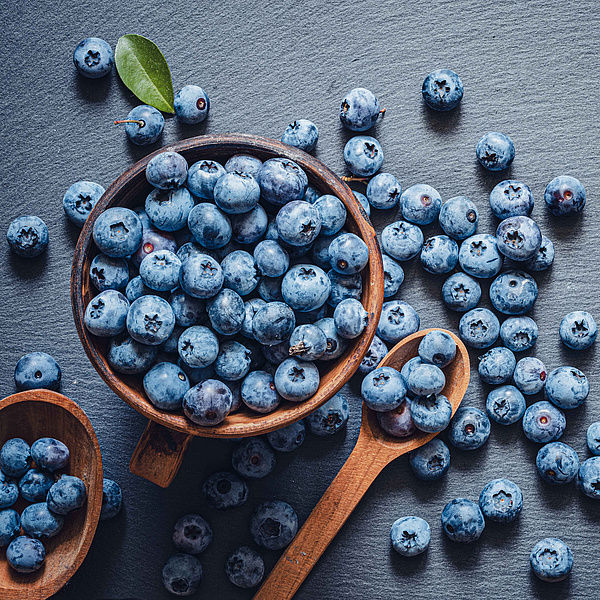 Bilberries
-
© stock.adobe.com - stone36
Bilberries
-
© stock.adobe.com - stone36
BioTransform is a new EU funded research project that has started investigating the largely unknown metabolic pathways of health-promoting constituents of food products in the human body. The goal is to better understand how so-called food bioactives are transformed in the gut and what influence their metabolites have on health. The Medical University of Graz is involved as a project partner.
Visualizing unknown metabolic pathways
Funded by the European Union as part of the Marie Skłodowska-Curie Actions program, the project BioTransform is coordinated by Nina Hermans of the University of Antwerp. A total of sixteen partner institutions in eight countries—including Med Uni Graz with project supervisor Sandra Holasek—are working together to close knowledge gaps regarding human metabolism.
As part of the project, eleven doctoral candidates are being trained to explore how health-promoting constituents of food, or food bioactives, are metabolized by microbes in the human gut and what role these metabolic products play in preventing chronic diseases such as obesity or diabetes.
Significance for nutrition and health
"Many foods, especially plants, contain bioactive compounds whose impact on health we only partially understand," explains Sandra Holasek. "In BioTransform, we want to understand what happens in the body after consumption and what substances are actually responsible for the positive effects of certain diets."
The approach of BioTransform is based on the idea that the original constituents of food are not necessarily responsible for health-promoting effects but rather their metabolic products—the compounds that arise when they are broken down by the gut microbiome.
Innovative research method focuses on olives and bilberries
To test the hypothesis of the international consortium, it is being investigated how selected bioactive substances are transformed in the human body and how biologically active the resulting metabolites are. As "proof of concept," BioTransform is concentrating on bioactive compounds from olive products (Olea europaea) and bilberries (Vaccinium myrtillus)—two foods typical of Mediterranean or Northern European diets, respectively. Both are considered particularly good for metabolic health, yet the precise compounds responsible for these effects remain unclear.
In the long term, the findings should help develop new dietary strategies and therapeutic approaches based on an individual's metabolism and the interaction between diet, the microbiome and health in the sense of personalized medicine.
Project data:
| Title: | BioTransform—Mapping the Uncharted Human Metabolism for Novel Food Bioactives |
| Period: | 1/11/2025 to 31/10/2029 |
| Program: | Marie Skłodowska-Curie Actions |
| EU funding: | EUR 3.29 million |
| Coordination: | Nina Hermans, University of Antwerp |
| Universities and research institutions involved: | National and Kapodistrian University of Athens, Medical University of Graz, University of Graz, Teagasc—Agriculture and Food Development Authority, University College Cork—National University of Ireland, University of Antwerp, Rīga Stradiņš University, University of Bath, Imperial College London, Latvian Institute of Organic Synthesis |
| Website: | https://biotransform-msca.eu/ |
Profile: Sandra Holasek
Sandra Holasek is professor of science communication and nutritional literacy as well as head of the "Translational Nutrition Research" research unit at the Medical University of Graz. Her research deals with the interaction of diet, metabolism and the immune system—for example in eating disorders, food intolerances or competitive sports. A special emphasis is placed on plant-based ingredients, the gut microbiome and their influence on health and immune function.
Further information and contact

Otto Loewi Research Center
Medical University of Graz